
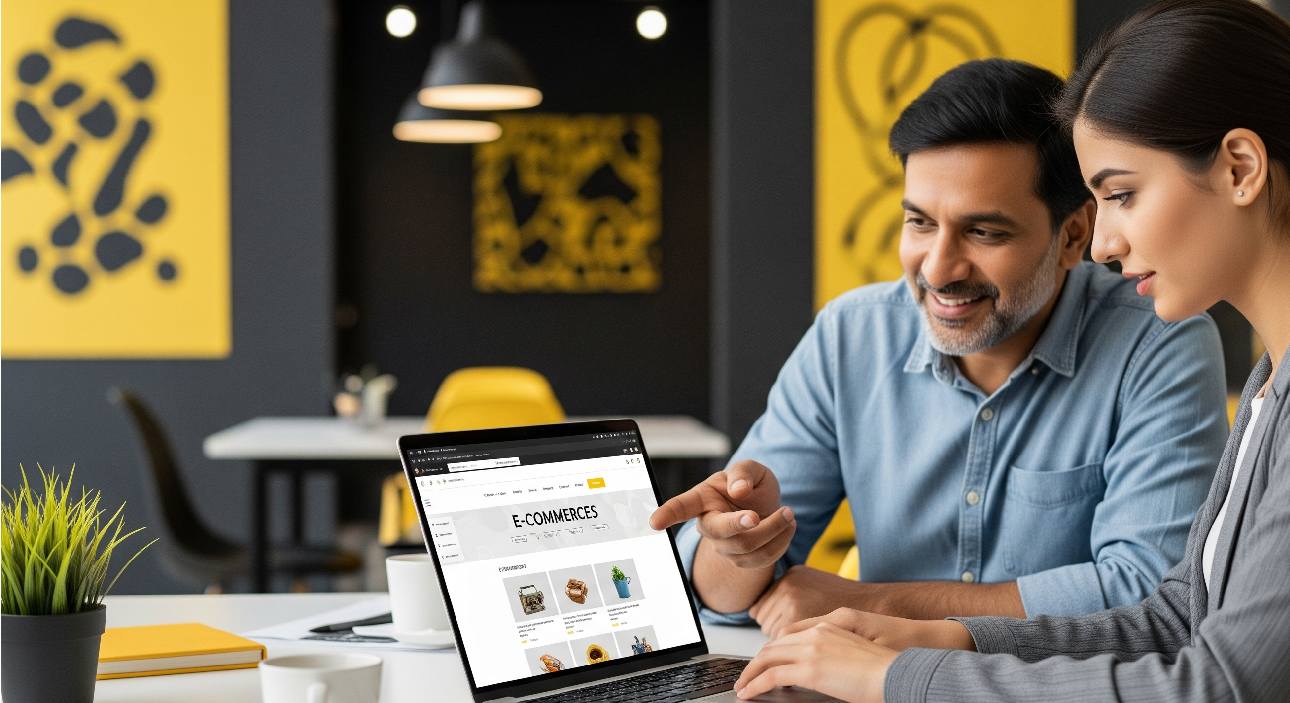
Actionable, reality-checked guide for owners, founders, and marketers — with quick wins and long-term plays.
The bottom line
If you sell to people or businesses in India (or want to be found by them), having a professionally built, mobile-first website is no longer optional — it’s the cost-effective foundation of discovery, trust, and sales. With India crossing 800–900 million internet users in the mid-2020s, the online audience is massive and increasingly buying, researching, and verifying brands online. See IAMAI/Kantar and DataReportal for the user growth trend. (India Brand Equity Foundation)
Part A — Market Reality & Quick Facts (why “a website” matters right now)
- Massive and growing internet audience — India had ~806M active internet users at the start of 2025 and was projected to top 900M in 2025; rural internet growth is a major driver. This means your potential online customers are across the country, not just in metro pockets. (DataReportal – Global Digital Insights)
- Ecommerce & online shopping are mainstream — India’s e-commerce sector has rapidly expanded; leading analysts report strong GMV growth and increasing penetration. Whether you sell physical products, bookings, SaaS, or services, online channels now represent meaningful revenue and discovery channels. (Bain)
- Search & discovery behavior favors sites — Consumers often use search engines and Google/YouTube to evaluate options; a website gives you searchable, indexable content that social posts alone can’t. Google’s local & search signals are optimized for websites — that’s free discoverability you own. (Google Business)
25 business-friendly reasons (reworked & grouped)
Below I group and expand the original 25 reasons into strategic categories and explain how each works in practice.
-
Market reach & visibility
- Reach where Indians are — A website gives national reach without setting up branches. With India’s internet expansion, your addressable market grows. (Action: target 2–3 non-local cities first with localized landing pages.) (India Brand Equity Foundation)
- Go beyond local footfall — Sell or capture leads outside your neighborhood using simple checkout or booking flows.
- Always-on digital storefront — Your site works 24/7. Implement basic automation: contact form → lead tag → WhatsApp reply template.
- Search visibility beats social-only — SEO and local pages help your business show up for intent-rich queries like “khatri bakery near me” or “hotel management course Hyderabad.” (Action: create city pages and schema markup.)
- Own your digital real estate — Your website is an asset you control — unlike marketplaces and social platforms where rules and reach change overnight.
-
Brand, trust & credibility
- Professional first impression — A clean site signals legitimacy. For B2B and higher-ticket B2C, this is non-negotiable.
- Meets modern customer expectations — If a customer can’t find you online, they suspect you of being behind the times.
- Tell your brand story — Use a “founder’s note / mission” page. Stories create emotional differentiation.
- Publish proof & case studies — Testimonials, media mentions, and before/after galleries convert doubt into trust.
- Maintain brand consistency — A website centralizes your messaging for ads, social, and offline materials.
-
Sales, leads & Revenue
- Always-on lead capture — Implement forms, WhatsApp buttons, and Calendly for instant appointments.
- Direct online sales — E-commerce (or booking modules) drive revenue and reduce middlemen fees.
- Cross-sell & upsell — Use product recommendations, service bundles, and checkout upsells to raise Average Order Value (AOV).
- Reduce dependence on marketplaces — Own checkout and customer data; marketplaces can delist you or change commissions.
- Enable new revenue models — Memberships, paid content, online courses, and subscriptions are now feasible through simple plugins or SaaS.
-
Marketing & efficiency
- More cost-effective than offline ads — Over time, SEO and content lower lead costs compared to repeated print or outdoor spends. Use landing pages to track ROI precisely. (Ipsos)
- Central hub for campaigns — Every ad and post should point to targeted landing pages to measure conversion.
- Data & analytics for decisions — Google Analytics + Search Console show what content and cities convert.
- Stronger local SEO — Location pages, schema, and integrated reviews help you win “near me” searches.
- Build owned audiences — Email lists and newsletters are assets you own and remarket to without platform dependency.
-
Customer experience & operations
- Self-service info hub — FAQs, price lists, and menu pages reduce repetitive calls and staff cost.
- Better support options — Chatbots and live chat improve experience and reduce friction.
- Faster trust-building in new geographies — A site gives instant credibility to new markets.
- Mobile-first for Bharat users — Most users access via mobile; responsive, fast sites are essential. (Action: target <=3s mobile load.)
- Future-ready — A website lets you adopt new payment rails, AI personalization, and local-language features faster than offline-only competitors. (Capgemini)
Extra critical points I added (you must include these)
These are not optional — leave them out and you risk lost sales, legal trouble, or botched launches.
-
Performance, mobile-first & accessibility (UX basics)
- Target: mobile page load <= 3s; Core Web Vitals good.
- Checklist: compressed images (webp), lazy loading, CDN, minimal third-party scripts.
- Accessibility: alt text, semantic headings, keyboard navigation, color contrast checks.
-
Security, Payments & Compliance
- SSL/TLS — mandatory.
- Payments — PG + UPI + COD options; choose PCI-compliant gateways (Razorpay, PayU, Cashfree, Stripe).
- Data & privacy — follow secure storage practices; prepare for India’s Data Protection rules (DPDP context) and IT Act requirements.
-
Multilingual & Localization Strategy
- Add Indic language pages (Hindi, Telugu, Tamil etc.) if you target non-English speaking regions. This increases reach and trust in rural/tier-2/3 markets. (India Brand Equity Foundation)
- Measurement & conversion optimization (CRO)
- Baseline KPIs: sessions, conversion rate, bounce rate, AOV, CAC, LTV.
- CRO checklist: single CTA, social proof above the fold, simple forms (≤3 fields), trust badges, fast checkout, phone/paypal/upi options.
-
Costs, timelines & build options (practical)
- MVP brochure site (informational): ₹6k–40k one-time (DIY/agency) — launch 1–3 weeks.
- Small e-commerce: ₹30k–2L+ one-time (depends on catalog & integrations) — 6–12 weeks.
- SaaS e-commerce (monthly): ₹3k–15k/month — fastest to launch.
These are ballpark ranges and will vary by scope and region.
How to start today — 7-step checklist (practical)
- Decide your primary objective: lead gen / sales / info?
- Pick a tech path: WordPress + WooCommerce (cost-effective), Shopify (fast, monthly), or custom (higher cost).
- Create 3 core pages: Home, Services/Products, Contact/Book. Add 1 city landing page.
- Add 3 trust elements: testimonials, GST/registrations, secure payment options.
- Install analytics & Search Console: track traffic and queries.
- Optimize for mobile and speed: compress images, use caching and CDN.
- Launch and run a small paid search/local campaign targeting 1–2 cities for 2 weeks, and measure traffic → leads → conversions.
ROI mini-calculator (quick formula)
Estimate monthly incremental revenue from the website:
MonthlyRevenue = Traffic_per_month × ConversionRate × AvgOrderValue
Example: 1,000 visits × 2% conversion × ₹1,200 AOV = ₹24,000/month.
To calculate CAC: AdSpend / Conversions. Use this to judge if improvements (faster pages, better copy) increase conversion enough to lower CAC and raise ROI.
Short India case examples (mini-stories)
- Tier-3 textile shop: After adding an e-commerce page + WhatsApp order button, they got 20 online orders/week from 3 neighboring states in 60 days; margins improved because middleman commissions fell.
- Training college: A dedicated “course landing page + Calendly booking” reduced cold call time by 40% and increased quality inquiries.
(Replace these with your customers’ real numbers for better credibility.)
Tech & vendor quick guide
- If you want cheap + control: WordPress with a developer + managed host (Cloudways/Hostinger).
- If you want plug & play: Shopify or Wix — fast but monthly fees.
- Payment gateways: Razorpay, Cashfree (India-native), Stripe India (if eligible).
- Integrations: WhatsApp widget (WATI/Quickwork), Google Analytics + GA4, Search Console, Hotjar for heatmaps.
SEO & content starter plan (first 90 days)
- Days 1–30: Launch MVP pages, set up analytics, create 3 blog posts targeting buyer-intent keywords + one local landing.
- Days 31–60: Run small Google Ads for top services; add product pages; collect first 10 reviews.
- Days 61–90: Begin email nurture for captured leads; optimize pages for conversion and run A/B test on CTA.
FAQs
1. Do I really need a website if my business runs fine offline?
Yes. Your offline customers still Google you before buying.
No website = instant trust drop.
In 2026, discovery, comparison, and verification happen online even if transactions happen offline.
2. I already have Instagram/Facebook pages — isn’t that enough?
No. Social media is borrowed land. Algorithms change, reach drops, accounts get restricted.
A website is owned real estate — stable, permanent, searchable, and buildable over time.
3. Isn’t a website expensive to maintain?
Not anymore.
Basic informational site: ₹6,000–₹40,000 one-time
E-commerce: ₹30,000–₹2,00,000+
Annual hosting/domain: ₹3,000–₹10,000
Return on investment beats any offline brochure or hoarding.
4. How long does it take to build a website?
Depends on complexity:
- Basic 3–5 page site: 1–3 weeks
- Professional business site: 2–6 weeks
- E-commerce store: 6–12 weeks
Delay usually happens because business owners take time to share content.
5. What if I don’t have content, photos, or videos?
No problem — content writing, product photography, stock visuals, and brand story development can be handled by your agency or consultant.
You just provide information; we convert it into conversion-focused content.
6. Will a website actually bring me more customers?
Yes — if built correctly.
A good website improves:
- Search visibility
- Trust
- Lead capture
- Conversion
- Retargeting
Combine it with SEO + WhatsApp + Google Ads and you’ll see measurable business growth.
7. What is the minimum I need to launch a website?
Just 3 things:
- Domain (₹500–₹1,000/yr)
- Hosting (₹2,000–₹6,000/yr)
- Basic content (About, Services, Contact)
Everything else can be added later.
8. Do I need a developer or can I do it myself?
DIY is possible, but…
- It will look amateur
- You may break things
- It won’t convert well
- It will be slow
For a business website, hire a professional — treat it like investing in a shop interior.
9. What about website speed? Why does it matter so much?
Speed directly affects conversions and SEO.
If your site takes more than 3 seconds to load, 53%+ users drop off.
Fast site = more leads, more sales, lower ad cost.
10. Can I take payments online?
Yes. UPI, cards, EMI, PayLater, COD — all possible using:
- Razorpay
- Cashfree
- PayU
- Stripe India
Even service businesses can accept payments for bookings, advance, and subscriptions.
11. How will I know if my website is working?
Through analytics.
You’ll get insights on:
- Traffic
- Cities people come from
- Pages they view
- Leads generated
- Conversions
- ROI
It turns business decisions from guesswork → data-driven.
12. Will a website help with Google “Near Me” searches?
Yes.
Local SEO + Google Business Profile + structured data = high chances of showing up in:
- “best electrician near me”
- “catering services hyderabad”
- “hotel management course in telangana”
This is where 60% of high-intent customers come from.
13. Can I update the website myself?
If built on WordPress, Shopify, or Wix — yes.
You can update:
- Text
- Images
- Blog posts
- Product info
- Prices
No technical skills needed.
14. Is security a problem? Can the site get hacked?
Only if it’s built carelessly.
With SSL, firewall, backups, and regular plugin updates — your website stays safe.
Most hacks happen on extremely cheap hosting or pirated themes/plugins.
15. What if I don’t get results even after making a website?
Then the problem is usually one of these:
- No traffic (no SEO/ads)
- Weak content (not customer-focused)
- Slow site
- No trust signals
- No clear CTA
- Wrong audience
- No retargeting
Fix these — results follow.
Even a simple fast website with a strong CTA can outperform fancy designs.
Checklist for publishing (pre-launch)
- Brand identity & logo in place
- SSL active
- Mobile speed under 3s and tested on low bandwidth
- Contact CTA visible on every page
- Payment options tested (for e-commerce)
- Google Analytics + Search Console added
- Privacy policy and T&C pages live
Closing & practical next steps (for you)
- Pick one objective: lead capture or direct sales.
- Build an MVP (3 pages + contact) within 2–4 weeks.
- Run a two-week local campaign to validate demand.
- Iterate with CRO, performance, and localization.
You May Also Like
-
Dec 2, 2025
“Marketing isn’t a cost. It’s your growth engine — but only if you fund it right.” If you run a...

-
Sep 20, 2022
How South Indian CAs Are Growing 3x Faster Online (And How You Can Too) Chartered Accountants (CAs) in South India...
-
Aug 20, 2022
Lorem ipsum dolor sit amet, consectetur adipiscing elit, sed do eiusmod tempor incididunt ut labore et dolore magna aliqua

-
Aug 20, 2022
Introduction Running a small business in 2025 is exciting, but it also comes with challenges. Fortunately, digital technology has made...
Sign up to receive our latest updates
Get in touch
Call us directly?
+91 81 8588 8588
Address
29-1359/2/3, St No 4, Deen Dayal Nagar, Secunderabad, TG, IN - 56
admin@theyellowpillow.com